Ⅰ. A convenient project in the heart of the city: the background of the birth of Charm City Circulator
In Baltimore, Maryland, USA, public transportation has always been a frequently discussed topic among residents and tourists. As one of the oldest independent cities in the United States, Baltimore has a position that cannot be ignored in terms of historical sites, harbor scenery and cultural landmarks.
However, the city also faces problems such as scattered urban layout, insufficient subway coverage, and traffic congestion. In order to improve the urban travel experience and promote tourism and the local economy, Charm City Circulator (CCC for short) came into being in 2009.
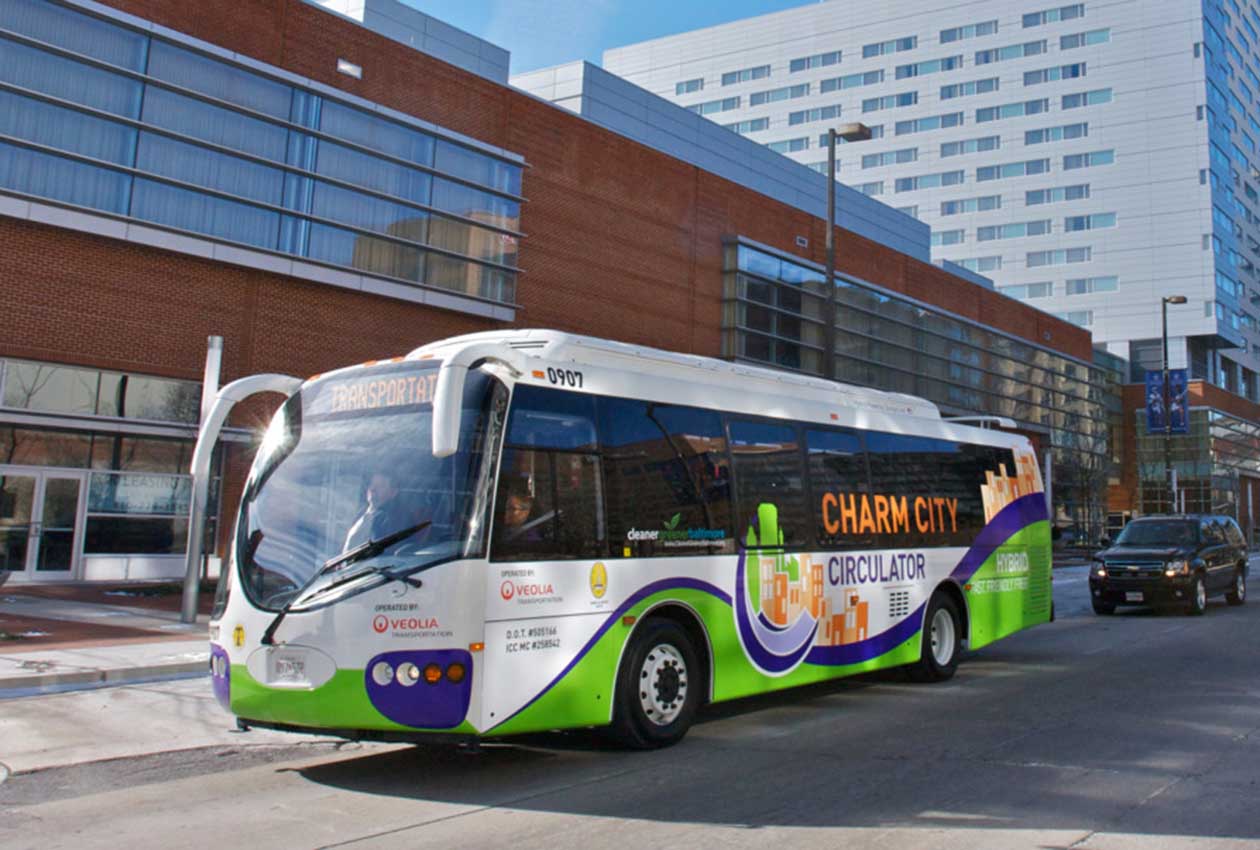
This free bus system led by the city government was originally intended to connect multiple transportation hubs in the city center with popular attractions, relieve traffic pressure, and provide tourists and local residents with a convenient and environmentally friendly way of travel. Since its opening, Charm City Circulator has played an increasingly important role in the city’s public transportation system.
Ⅱ. What is Charm City Circulator?
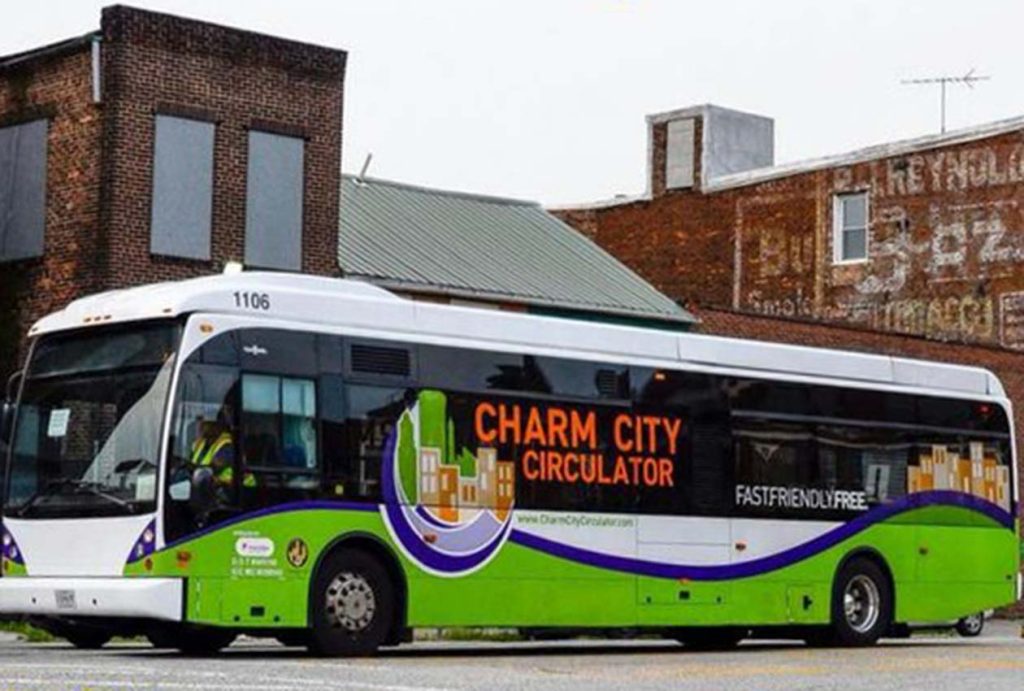
Charm City Circulator is a completely free urban circular bus system provided by the Baltimore City Government. There are currently four main routes in operation, covering multiple sections from the Inner Harbor to the city center, East Baltimore, West Baltimore, and even connecting to the cultural corridor and university district. These buses appear every 10-15 minutes, and the high frequency of departure intervals makes it a more flexible urban transportation option than subways or ordinary buses.
Unlike traditional public transportation, CCC is completely free and does not require any tickets or registration procedures. This “zero threshold” setting not only attracts a large number of travelers with limited budgets, but also greatly improves the commuting convenience of urban residents.
Ⅲ. Detailed explanation of the four main lines: no worries when traveling around the city
1. Orange Route: an urban artery connecting the east and west main axes
The Orange Route is the earliest operating line, running through both east and west directions. Starting from Harbor East, go west along Pratt Street and Lombard Street until the Hollins Market area. This line covers several core attractions, such as the Baltimore Convention Center, the Inner Harbor Aquarium, the Camden Yards baseball stadium, and the Lexington Market. It is not only one of the most frequently used routes for tourists, but also an important commuting route for locals to go to get off work.
If you are visiting Baltimore for the first time, taking the Orange Line can quickly grasp the geographical context of the city. As a travel blogger, I suggest you get off at Camden Yards Station to experience the exciting atmosphere of a baseball game, and then continue to take the Orange Line to the Modern Art Gallery in the East District.
2. Purple Route: The connection between cultural corridors and higher education institutions
The Purple Route starts from the Federal Hill area in South Baltimore, passes through the city center, and extends to Charles Village, near Johns Hopkins University. This is a north-south route, and its biggest highlight is the many museums, parks, and academic institutions along the route.
If you are interested in the cultural heritage of Baltimore, the Purple Route is the best choice. It stops at places such as the Walt Disney Birthplace Memorial, the Maryland History Museum, and the Mount Vernon area, which has a large number of cafes and bookstores. Whether you are visiting the palace of knowledge or looking for places of inspiration, the Purple Line can take you directly to your destination.
3. Green Route: Shuttle between medical care and education
The Green Route is the main route connecting the Johns Hopkins Medical Campus in East Baltimore with the city center. In addition to serving patients, medical staff, and university teachers and students, it also facilitates tourists to visit medical museums, university campuses, and other places.
Today, as medical tourism and educational inspections are becoming new trends in travel, the role of the Green Route is becoming more and more prominent. If you are interested in visiting the Johns Hopkins University Medical Museum or simply want to experience the academic atmosphere, this route will be very suitable.
4. Blue Route (Banner Route): Cruise along the harbor and enjoy the harbor scenery
The Blue Route, also known as the Banner Route, is a harbor route designed specifically for the Inner Harbor of Baltimore. It starts from Fort McHenry, circles the entire Inner Harbor area, and finally returns. As the birthplace of the American national anthem “The Star-Spangled Banner”, Fort McHenry is one of the most symbolic historical sites in Baltimore.
During the journey of the Blue Line, you can enjoy the harbor scenery and pass by landmarks such as the American Visionary Art Museum, Rash Field, and the National Aquarium. It is recommended to choose to take the bus at dusk, and you will have the opportunity to capture the beautiful sunset of the sea and sky.
V. Why is it worth a try? Five major advantages
Free-the real “zero-cost exploration”
In the United States, especially in cities with high transportation costs, any “free” service often has additional conditions behind it. But Charm City Circulator is truly completely free: no tickets, no registration, and no mandatory advertising promotion. For travelers with limited budgets who want to get to know Baltimore in depth, this is simply a “god teammate” for city exploration.
High frequency of departure-no more anxious waiting for the bus
Unlike many American city buses where “there are cars like gods”, CCC has a very high departure frequency. During normal operating hours, a bus arrives at the station every 10 to 15 minutes. Especially during the peak tourist season, such departure intervals greatly ease the pressure of crowded crowds.
Environmental protection and low carbon – a model of sustainable development in modern cities
Charm City Circulator uses clean energy vehicles, including electric buses and hybrid buses. This environmental protection concept complements the “Green City Plan” that Baltimore has promoted in recent years. While visiting the city, tourists can also participate in environmental protection actions to reduce carbon footprints invisibly.
Wide coverage – taking into account both attractions and communities
The four CCC routes not only connect major attractions, but also cover multiple communities, campuses and commercial areas. This “tourism + local” dual service attribute makes it different from traditional sightseeing buses and more practical and friendly.
Safety and convenience – friendly riding experience
CCC buses are in good condition, comfortable seats, and barrier-free facilities on board, suitable for all passengers. Drivers are generally friendly and helpful, and the carriages are clean and quiet, making them a rare “civilized window” in the city.
VI. How to ride? A Beginner’s Guide
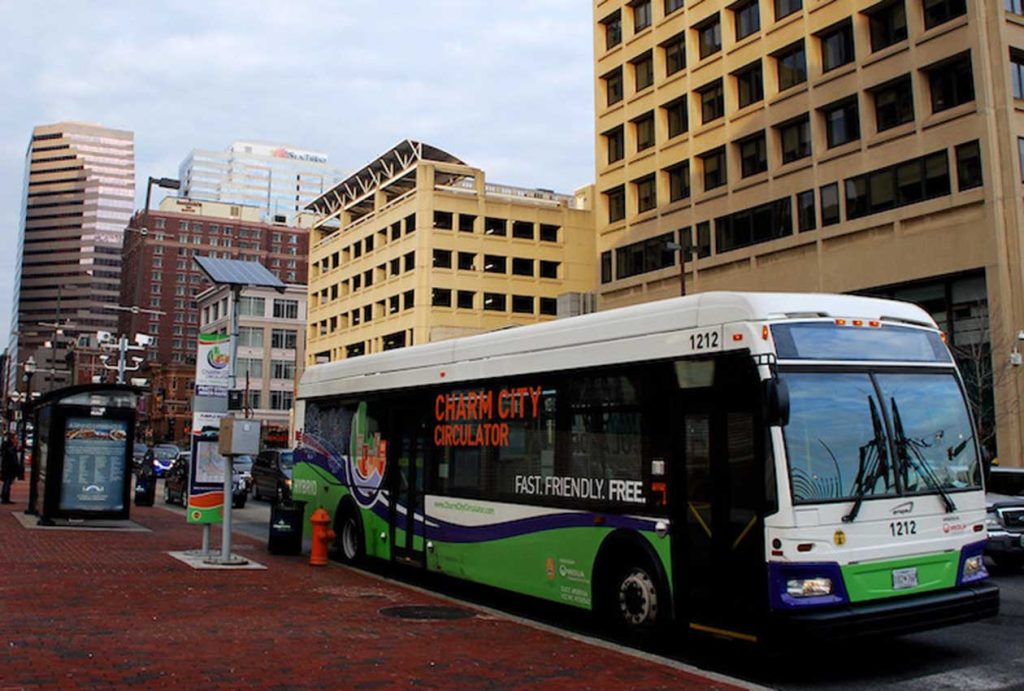
Charm City Circulator does not require tickets or ticket gates, so you can “get on and get off” at any time. The name of the route and the direction are clearly marked on the front of each bus, and the body color matches the theme color of the route for easy identification.
You only need to stand at the designated bus stop and wave when the bus approaches, and the driver will automatically stop when he sees it. Before the door closes, the bus usually waits until all passengers are seated before starting, which is very user-friendly.
Each bus has an electronic voice and screen prompting the name of the next stop, so even new tourists who are not familiar with the place name can easily grasp the station information.
VII. Recommended one-day tour route: CCC takes you around Baltimore
Morning:
Depart from Fell’s Point → Take the Orange Line → Arrive at Camden Yards → Visit the baseball stadium and Sports Legends Museum
Noon:
Take the Purple Line → Go to Mount Vernon → Visit the Peabody Library and Walt Disney Memorial → Enjoy lunch at a local restaurant
Afternoon:
Change to the Green Line → Visit Johns Hopkins Campus → Museum of Medicine → Wander around the bookstores around the campus
Evening to night:
Return to the Inner Harbor → Take the Blue Line → Go to Fort McHenry → Enjoy the beautiful sunset at the harbor
Basically, you don’t need to pay any transportation fees all day, and you can travel through multiple dimensions of the city with CCC alone.
Ⅷ. Usage tips and precautions
Operation time needs attention: Although CCC operates frequently, the time of each line is slightly different. Some lines may be suspended on holidays or late at night, so you should check the latest arrangements before traveling.
There are more people during peak hours: The Orange Line and the Blue Line are particularly crowded during the peak summer tourist season. It is recommended to avoid commuter peaks or arrange boarding and alighting stops in advance.
No large luggage: Although the bus is open to passengers, please avoid carrying large luggage to avoid disturbing others.
The location of the bus stop may not be obvious: The bus stops in some community areas are more hidden. It is recommended to use a map or consult locals to confirm the location of the station.
Charm City Circulator is a “city gentleness” given by Baltimore to tourists and citizens. It is not only a means of transportation, but also a manifestation of the city’s attitude: inclusive, convenient, environmentally friendly, and people-friendly.
If you are planning to visit Baltimore, you might as well start with Charm City Circulator, open the door to this city at zero cost, and make every journey more calm and comfortable.